
Showing posts with label holidays. Show all posts
Showing posts with label holidays. Show all posts
Monday, December 31, 2018


Sunday, July 15, 2018

Tuesday, March 27, 2018

Monday, January 29, 2018
What to take for your holidays
In general:
 |
| Image by Wikiphoto-Creative Commons License |
- passport / identity card
- medical insurance card / documents
- money /credit or debit card
- mobile phone and charger
- camera, charger and memory card
- toilettries
- shaving equipment (if you are a man)
- umbrella
- clothes
- glasses and/or contact tenses + lens solution
- shoes
- suitcase / backpack
- keys
- medication and first-aid kit
- tampons and sanitary towels (if you are a woman)
- wet wipes and nappies (if you have a baby)
- books / tablet with games
- extra bag for dirty laundry
- water bottle to refill

- walking boots
- light raincoat
- sunglasses
- cap
- toilet paper
- tent
- sleeping bag
- torch
- snacks
- sunscreen
- gloves
- pocket knife
- rope
- guidebook
- phrase book of the language
- formal clothes (in case you decide to go to a museum, theatre...)
- maps dowloaded from Google Maps into your phone
- towel
- beach umbrella
- book
- sunglasses
- sun hat
- swimsuits or bikinis
- casual T-shirts
- flip flops
- sunscreen
Sunday, January 14, 2018
Wednesday, July 5, 2017
Wednesday, January 4, 2017
Epiphany Day
Epiphany is celebrated 12 days after Christmas on 6th January (or January 19th for some Orthodox Church who have Christmas on 7th January) and is the time when Christians remember the Wise Men, or Magi (also sometimes called the Three Kings) who visited Jesus.
Epiphany is also when some Churches remember when Jesus was Baptised, when he was about 30, and started to teach people about God. Epiphany means 'revelation' and both the visit of the Wise Men and his Baptism are important times when Jesus was 'revealed' to be very important.
Some Churches celebrate use Epiphany to celebrate and remember both the visit of the Wise Men and Jesus's Baptism!
Epiphany is mainly celebrated by Catholics and Orthodox Christians. It's a big and important festival in Spain, where it's also known as 'The festival of the three Magic Kings' - 'Fiesta de Los tres Reyes Magos', and is when Spanish and some other Catholic children receive their presents - as they are delivered by the Three Kings!
In Spain on Epiphany morning, or Día de Reyes you might go to the local bakers and buy a special cake/pastry called a 'Roscón de Reyes'. They are normally decorated with a paper crown. These are normally a figure of a king (if you find that you can wear the crown) and a dried bean (if you find that you're meant to pay for the cake!). In Catalonia it's known as a Tortell or Gâteau des Rois and is stuffed with marzipan.
In France you might eat a 'Galette des Rois', a type of flat almond cake. It has a toy crown cooked inside it and is decorated on top with a gold paper crown.
There are similar traditions in Mexico where Epiphany is known as 'El Dia de los Reyes' (the day of The Three Kings). It's traditional to eat a special cake called 'Rosca de Reyes' (Three Kings Cake). A figure of Baby Jesus is hidden inside the cake. Whoever has the baby Jesus in their piece of cake is the 'Godparent' of Jesus for that year.
In Italy, some children also get their presents on Epiphany. But they believe that an old lady called 'Befana' brings them. Children put stockings up by the fireplace for Befana to fill.
In Austria, at Epiphany, some people write a special sign in chalk over their front door. It's a reminder of the Wise Men that visited the baby Jesus. It's made from the year split in two with initials of the names that are sometimes given to 'the three wise men', Caspar, Melchior and Balthazar, in the middle. So 2017 would be: 20*C*M*B*17. The sign is meant to protect the house for the coming year. Some parts of Germany also have the tradition of marking over doors. The 'Four Hills' Ski Jumping Tournament also finishes on 6th January in Bischofshofen, Austria.
At Epiphany in Belgium, children dress up as the three wise men and go from door to door to sing songs and people give them money or sweets, kind of like Trick or Treating on Halloween. Children in Poland also go out singing on Epiphany.
In Ireland, Epiphany is also called 'Nollaig na mBean' or Women's Christmas. Traditionally the women get the day off and men do the housework and cooking! It is becoming more popular and many Irish women now get together on the Sunday nearest Epiphany and have tea and cakes!
In the Ethiopian Orthodox Church (which celebrates Christmas on 7th January), twelve days after Christmas, on 19th January, the three day celebration of Ethiopians Timkat starts. This celebrates Jesus's baptism.
Epiphany Eve (also known as Twelfth Night) marks the end of the traditional Christmas celebrations and is the time when you were meant to take Christmas decorations down - although some people leave them up until Candlemas.
Information from http://www.whychristmas.com/customs/epiphany.shtml
Epiphany is also when some Churches remember when Jesus was Baptised, when he was about 30, and started to teach people about God. Epiphany means 'revelation' and both the visit of the Wise Men and his Baptism are important times when Jesus was 'revealed' to be very important.
 |
| Gran Vía, Madrid - image by Carlos Teixidor Cadenas |
Epiphany is mainly celebrated by Catholics and Orthodox Christians. It's a big and important festival in Spain, where it's also known as 'The festival of the three Magic Kings' - 'Fiesta de Los tres Reyes Magos', and is when Spanish and some other Catholic children receive their presents - as they are delivered by the Three Kings!
 |
| Roscón de Reyes - image by Tamorlan |
In France you might eat a 'Galette des Rois', a type of flat almond cake. It has a toy crown cooked inside it and is decorated on top with a gold paper crown.
There are similar traditions in Mexico where Epiphany is known as 'El Dia de los Reyes' (the day of The Three Kings). It's traditional to eat a special cake called 'Rosca de Reyes' (Three Kings Cake). A figure of Baby Jesus is hidden inside the cake. Whoever has the baby Jesus in their piece of cake is the 'Godparent' of Jesus for that year.
In Italy, some children also get their presents on Epiphany. But they believe that an old lady called 'Befana' brings them. Children put stockings up by the fireplace for Befana to fill.
In Austria, at Epiphany, some people write a special sign in chalk over their front door. It's a reminder of the Wise Men that visited the baby Jesus. It's made from the year split in two with initials of the names that are sometimes given to 'the three wise men', Caspar, Melchior and Balthazar, in the middle. So 2017 would be: 20*C*M*B*17. The sign is meant to protect the house for the coming year. Some parts of Germany also have the tradition of marking over doors. The 'Four Hills' Ski Jumping Tournament also finishes on 6th January in Bischofshofen, Austria.
At Epiphany in Belgium, children dress up as the three wise men and go from door to door to sing songs and people give them money or sweets, kind of like Trick or Treating on Halloween. Children in Poland also go out singing on Epiphany.
In Ireland, Epiphany is also called 'Nollaig na mBean' or Women's Christmas. Traditionally the women get the day off and men do the housework and cooking! It is becoming more popular and many Irish women now get together on the Sunday nearest Epiphany and have tea and cakes!
In the Ethiopian Orthodox Church (which celebrates Christmas on 7th January), twelve days after Christmas, on 19th January, the three day celebration of Ethiopians Timkat starts. This celebrates Jesus's baptism.
Epiphany Eve (also known as Twelfth Night) marks the end of the traditional Christmas celebrations and is the time when you were meant to take Christmas decorations down - although some people leave them up until Candlemas.
Information from http://www.whychristmas.com/customs/epiphany.shtml
Monday, September 5, 2016
Labor day in the USA and Canada
 |
| Labor day parade in New York 1882. |
Labor Day in the United States is a public holiday celebrated on the first Monday in September. It honors the American labor movement and the contributions that workers have made to the strength, prosperity, and well-being of the country. It is the Monday of the long weekend known as Labor Day Weekend and it is considered the unofficial end of summer.
Beginning in the late 19th century, as the trade union and labor movements grew, trade unionists proposed that a day be set aside to celebrate labor. "Labor Day" was promoted by the Central Labor Union and the Knights of Labor, which organized the first parade in New York City. In 1887, Oregon was the first state of the United States to make it an official public holiday. By the time it became an official federal holiday in 1894, thirty U.S. states officially celebrated Labor Day.
Canada's Labour Day is also celebrated on the first Monday of September. More than 80 countries celebrate International Workers' Day on May 1 – the ancient European holiday of May Day – and several countries have chosen their own dates for Labour Day.
from https://en.wikipedia.org/wiki/Labor_Day
Friday, September 2, 2016


Tuesday, June 21, 2016
Practise your English during the summer holidays
Now our school year is over we have to start thinking of how to keep our English alive.
- If you have failed, you should follow the directions given in class and write to your teacher if you need.
- If you have passed English this year there are many ways of keeping it alive without having to study grammar or read thick books during the summer. These are some of the things you can do:
- Listen to songs in English, read the lyric and maybe even sing along. There are many websites where you can find the lyrics of your favourite songs in English.
- Watch our favourite TV programmes and films in English and even read the subtitles in English. this is a good option if we can't grasp much of what is being said.
- There is an interesting website where you can find short audio files to practise your English, audio-lingua.eu. Just choose levels A1 or A2.
- Read the news in English. Many newspapers have an interesting and easy to read website if we are learning English: USA Today, BBC English, Time, Newsweek, New York Times, etc. or choose a specific newspaper for English language learners, such as News in Levels.
- It's also a good occasion to have a look at the materials we've been making this year for our eTwinning project, Let's Cook Together.
- Try Duolingo to learn English or any other language autonomously.
- And finally, just pay attention of whatever you see around. There are lots of notices, instruction booklets, etc. in English and you can certainly understand more than you problably think.

Sunday, December 13, 2015
Sunday, March 29, 2015

Sunday, April 13, 2014
Easter in the United Kingdom
 Easter in celebrated in the spring in Christian areas. Therefore it is also celebrated in the United Kingdom.
- The BBC website will let you know more about Lent in the United Kingdom.
- This other page in the BBC website is about Easter in the United Kingdom.
- Isabel Pérez has lots of interesting resources to learn about Easter and Easter traditions in Spain and in English-speaking countries.
Friday, September 7, 2012
About to start a new school year
 | |
| from Banco Imágenes ITE |
If you want to succeed at school, you should:
- Pay attention to your teachers in class and ask them if there is something you do not understand.
- Decide how long you are going to study every day (even if there are no written exercises for homework)
- Make a timetable for your study time and follow it. Stick in on your desk so that you can easily see it.
- Allow for some rest if you have to study for longer periods than one hour.
- Everything you may need should be at reach so that you don't have any excuses for standing up.
- Ask your family for help: they might ask you how things are going, help you study for your exams, etc.
- Tell your family how things are going. Tell them when there is good and bad news.
Tuesday, March 27, 2012
ESL / EFL Easter time
 |
| by Alfonso Pardo Martínez- ITE |
Next week we will celebrate Easter. It is one of the major celebrations in Europe and particularly in Spain. If you want to know a bit more you can watch this video and do the quiz about it.
You can also have a look at the presentations made within our eTwinning project by our Polish and Lithuanian partners.
- Easter in Lithuania
- Easter in Poland
- Easter in Spain
- This video about Easter in Spain
Tuesday, May 17, 2011
Día das Letras Galegas
 |
| Lois Pereiro |
Try reading one of Lois Pereiro's books as this year he's celebrated. You'll certainly like them.
If you want to know more about this date read the presentation that was made for our eTwinning project, International Calendar.
If you want to learn about Lois Pereiro, the poet from Monforte de Lemos, try these links: (Galician), (Spanish), (English)
If you want to know more about this date read the presentation that was made for our eTwinning project, International Calendar.
If you want to learn about Lois Pereiro, the poet from Monforte de Lemos, try these links: (Galician), (Spanish), (English)
Thursday, April 21, 2011
Easter holidays
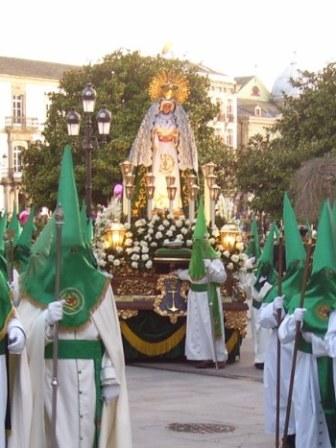
We'll be back to work next Tuesday.
Saturday, March 5, 2011


Subscribe to:
Posts (Atom)