Pages
This blog has been designed to provide information about the activities held at the social studies bilingual sections in CPI Tino Grandío (Guntín,Spain). The English language and Social Studies teachers have elaborated most of the resources you can see but our "auxiliares de conversa" also have their own page and posts. Therefore everyone is invited to have a look .
Showing posts with label English. Show all posts
Friday, February 14, 2020
Monday, December 9, 2019
Interesting Instagram accounts for English language students
![]() |
| BBC Learning English |
- Giner A1/A2 English
- Giner B1 English
- Test English Com (grammar)
- Ewa English
- Envision your English (vocabulary)
- EFL_ana
- BBC Learning English
- Heythere English
- Arnel's Everyday English (difficulties)
And also the BBC News page for short videos about the news.
![]() |
| Giner B1 English |
Wednesday, August 7, 2019
Monday, July 8, 2019
Monday, July 1, 2019
Monday, January 28, 2019
Thursday, December 27, 2018
Sunday, October 21, 2018
Quantifiers in English
This is a chart with the main quantifiers in English. Pay attention to which ones are used in affirmative, interrogative and negative sentences:
FURTHER READING:
SOME EXERCISES:
- Bristish Council (exercise at the bottom of the page)
- To learn English: some, any, no
- To learn English: much, many
- To learn English: a few, a little, few, little
- Englisch Hilfen:
Friday, June 22, 2018
Tuesday, June 19, 2018
Be in contact with English this summer
Now our school year is over we have to start thinking of how to keep our English alive.
- If you have failed, you should follow the directions given in class and write to your teacher if you need.
- If you have passed English this year there are many ways of keeping it alive without having to study grammar or read thick books during the summer. These are some of the things you can do:
- Listen to songs in English, read the lyrics and maybe even sing along. There are many websites where you can find the lyrics of your favourite songs in English.
- Watch our favourite TV programmes and films in English and even read the subtitles in English. this is a good option if we can't grasp much of what is being said.
- Watch YouTube videos in English with subtitles also in English.
- There is an interesting website where you can find short audio files to practise your English, audio-lingua.eu. Just choose levels A1 or A2.
- Read the news in English. Many newspapers have an interesting and easy to read website if we are learning English: USA Today, BBC English, Time, Newsweek, New York Times, etc. or choose a specific newspaper for English language learners, such as News in Levels.
- If you want to do some practice work without really studying you can go to the British Council website:
- Listening audios about different topics. You can do the tasks after listening and you can also read the scripts.
- Reading texts about a variety of topics. They are classified according to their level of difficulty: A2, B1, B2, etc. At the end of each story there are some tasks and you can also get a downloadable version.
- Vocabulary, you can read about some topics and then do some vocabulary activities.
- And there are also other sections you might have a look at: grammar, writing, videos...
- Try Duolingo to learn English or any other language on your own.
- And finally, just pay attention of whatever you see around. There are lots of notices, instruction booklets, etc. in English and you can certainly understand more than you problably think.
Sunday, May 13, 2018
Monday, April 9, 2018
Games for 1º ESO
In your computer, follow these instructions:- Menú de Aplicativos
- Xogos
- Paquete Eductativos GCompris
- Language-English
- Games
- Choose the activites that are surrounded by a circle in this image.
Thursday, March 22, 2018
Wednesday, February 14, 2018
How to organize the vocabulary you are learning
These are just some ideas:
- Keeping a notebook to write down new words you come across is a good idea. However, you should revise the words you've written down every now and them to make learning effective.
- Classify the vocabulary into groups according to type of word, meaning, level of difficulty, etc.
- Diagrams can also be a useful tool if visually organising words is helpful for you:
- Writing down expressions, not just words, as you encounter them, will help you associate them in the future. Some words tend to collocate and appear in association with others:
- to and fro
- see you later
- do one's homework
- to make a noise
- to be in the red
- and so on
Thursday, January 4, 2018
Sunday, December 17, 2017
Tuesday, September 12, 2017
Saturday, July 1, 2017
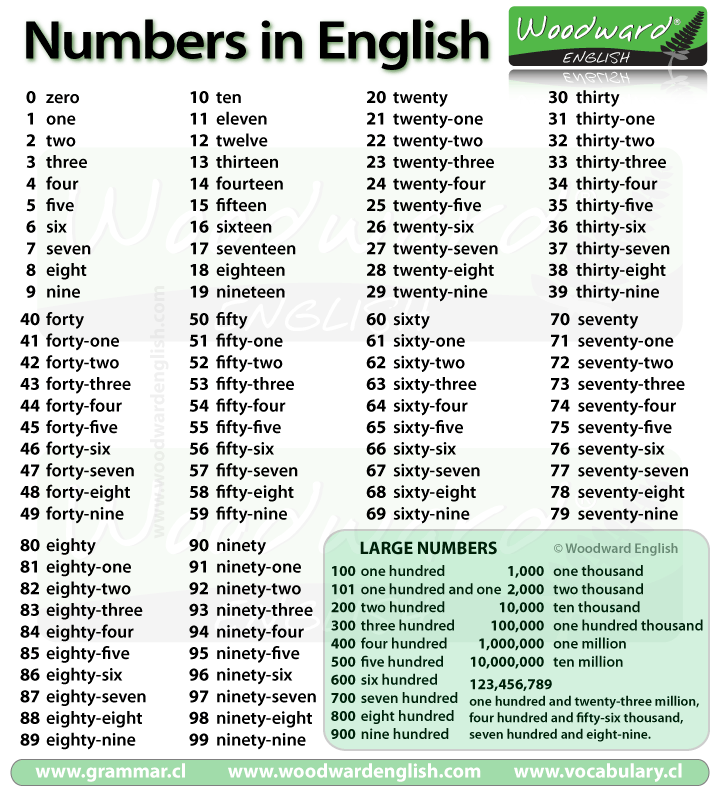
How to read numbers in English
BASIC NUMBERS
Remember that large numbers are separated by commas: 123,456,789 and decimals need dots: 1.25
MORE DIFFICULT NUMBERS
We don't normally write numbers with words, but it's possible to do this and, of course, this will show how we say the numbers.
In writing large numbers, American English uses a comma ( , ) to separate thousands, millions, etc. American English also uses a hyphen ( - ) to separate "tens" words (twenty, fifty, etc.) and
"ones" words (one, three, six, etc.)
Examples:
written said
1,011 one thousand eleven
21,011 twenty-one thousand eleven
721,011 seven hundred twenty-one thousand eleven
....................................................................................................................................
1,256,721 one million two hundred fifty-six thousand seven hundred twenty-one
31,256,721 thirty-one million two hundred fifty-six thousand seven hundred twenty-one
631,256,721 six hundred thirty-one million two hundred fifty-six thousand seven hundred twenty-one
....................................................................................................................................
1,492,638,526 one billion four hundred ninety-two million six hundred thirty-eight thousand five hundred twenty-six
41,492,638,526 forty-one billion four hundred ninety-two million six hundred thirty-eight thousand five hundred twenty-six
941,492,638,526 nine hundred forty-one billion four hundred ninety-two million six hundred thirty-eight thousand five hundred twenty-six
__________________________________________________________________
NOTES:
REFERENCE:
http://www.studyenglishtoday.net/cardinal-numbers.html
https://en.wikipedia.org/wiki/English_numerals
Remember that large numbers are separated by commas: 123,456,789 and decimals need dots: 1.25
MORE DIFFICULT NUMBERS
We don't normally write numbers with words, but it's possible to do this and, of course, this will show how we say the numbers.
In writing large numbers, American English uses a comma ( , ) to separate thousands, millions, etc. American English also uses a hyphen ( - ) to separate "tens" words (twenty, fifty, etc.) and
"ones" words (one, three, six, etc.)
Examples:
written said
1,011 one thousand eleven
21,011 twenty-one thousand eleven
721,011 seven hundred twenty-one thousand eleven
....................................................................................................................................
1,256,721 one million two hundred fifty-six thousand seven hundred twenty-one
31,256,721 thirty-one million two hundred fifty-six thousand seven hundred twenty-one
631,256,721 six hundred thirty-one million two hundred fifty-six thousand seven hundred twenty-one
....................................................................................................................................
1,492,638,526 one billion four hundred ninety-two million six hundred thirty-eight thousand five hundred twenty-six
41,492,638,526 forty-one billion four hundred ninety-two million six hundred thirty-eight thousand five hundred twenty-six
941,492,638,526 nine hundred forty-one billion four hundred ninety-two million six hundred thirty-eight thousand five hundred twenty-six
__________________________________________________________________
NOTES:
- In American English, the order of large numbers is thousand, million, billion, trillion, etc. (1,000; 1,000,000; 1,000,000,000; 1,000,000,000,000; etc.)
- In American English a thousand million is a billion, but in British English, a thousand million is a milliard.
- When saying large numbers, do not make thousand, million, billion, trillion, etc. plural. (WRONG: *twenty thousands dollars; *five millions people; CORRRECT: twenty thousand dollars; five million people)
- Commas separate thousands, millions, etc. (21,011-31,256,721-941,492,638,526)
- People often say "a" instead of "one" before hundred, thousand, etc. and they often add "and" before the last number (a hundred and twenty-one / a thousand and eleven)
DIFFERENCE BETWEEN BRITISH AND AMERICAN ENGLISH (from Wikipedia)
| Common British vernacular | Common American vernacular | Common British vernacular | |
| "How many marbles do you have?" | "What is your house number?" | "Which bus goes to the high street?" | |
| 101 | "A hundred and one." | "One-oh-one." Here, "oh" is used for the digit zero. | "One-oh-one." |
| 109 | "A hundred and nine." | "One-oh-nine." | "One-oh-nine." |
| 110 | "A hundred and ten." | "One-ten." | "One-one-oh." |
| 117 | "A hundred and seventeen." | "One-seventeen." | "One-one-seven." |
| 120 | "A hundred and twenty." | "One-twenty." | "One-two-oh", "One-two-zero." |
| 152 | "A hundred and fifty-two." | "One-fifty-two." | "One-five-two." |
| 208 | "Two hundred and eight." | "Two-oh-eight." | "Two-oh-eight." |
| 334 | "Three hundred and thirty-four." | "Three-thirty-four." | "Three-three-four." |
ORDINAL NUMBERS AND FRACTIONS
Ordinal numbers are also used for fractions:
- 1/10 - one tenth
- 3/4 - three quarters
- 15/16 - fifteen sixteenths
Some numbers have special names in certain contexts:
0:
- zero: formal scientific usage
- naught / nought: mostly British usage
- aught: Mostly archaic but still occasionally used when a digit in mid-number is 0 (as in "thirty-aught-six", the .30-06 Springfield rifle cartridge and by association guns that fire it)
- oh: used when spelling numbers (like telephone, bank account, bus line [British: bus route])
- nil: in general sport scores, British usage ("The score is two–nil.")
- nothing: in general sport scores, American usage ("The score is two–nothing.")
- null: used technically to refer to an object or idea related to nothingness. The 0th aleph number (\aleph_0) is pronounced "aleph-null".
- love: in tennis, badminton, squash and similar sports (origin disputed, often said to come from French l'œuf, "egg"; but the Oxford English Dictionary mentions the phrase for love, meaning nothing is at risk)
- ace in certain sports and games, as in tennis or golf, indicating success with one stroke, and the face of a die, playing card or domino half with one pip
- birdie in golf denotes one stroke less than par, and bogey, one stroke more than par
- couple
- pair
- eagle in golf denotes two strokes less than par
- duo
- trio
- half a dozen
- a dozen (first power of the duodecimal base), used mostly in commerce
- A century, also used in cricket scores and in cycling for 100 miles.
- A ton, in Commonwealth English, the speed of 100 mph[5] or 100 km/h.
- A great hundred or long hundred (twelve tens; as opposed to the small hundred, i.e. 100 or ten tens), also called small gross (ten dozens), both archaic
- a gross (a dozen dozens, second power of the duodecimal base), used mostly in commerce
- googol (1 followed by 100 zeros), used in mathematics; not to be confused with the name of the company Google (which was originally a misspelling of googol)
1–0 British English: one-nil; American English: one-nothing, one-zip, or one-zero
0–0 British English: nil-nil, or more rarely nil all; American English: zero-zero or nothing-nothing, (occasionally scoreless or no score)
2–2 two-two or two all; American English also twos, two to two, even at two, or two up.
http://www.studyenglishtoday.net/cardinal-numbers.html
https://en.wikipedia.org/wiki/English_numerals
Tuesday, June 20, 2017
Summer English
Now our school year is over we have to start thinking of how to keep our English alive.
- If you have failed, you should follow the directions given in class and write to your teacher if you need.
- If you have passed English this year there are many ways of keeping it alive without having to study grammar or read thick books during the summer. These are some of the things you can do:
- Listen to songs in English, read the lyric and maybe even sing along. There are many websites where you can find the lyrics of your favourite songs in English.
- Watch our favourite TV programmes and films in English and even read the subtitles in English. this is a good option if we can't grasp much of what is being said.
- Watch YouTube videos in English with subtitles also in English.
- There is an interesting website where you can find short audio files to practise your English, audio-lingua.eu. Just choose levels A1 or A2.
- Read the news in English. Many newspapers have an interesting and easy to read website if we are learning English: USA Today, BBC English, Time, Newsweek, New York Times, etc. or choose a specific newspaper for English language learners, such as News in Levels.
- It's also a good occasion to have a look at the materials we've been making this year for our eTwinning project, East or West, Home is Best.
- Try Duolingo to learn English or any other language autonomously.
- And finally, just pay attention of whatever you see around. There are lots of notices, instruction booklets, etc. in English and you can certainly understand more than you problably think.
Sunday, January 15, 2017
Subscribe to:
Posts (Atom)